lab.
the process
for the darkroom you have: a sink at home, a shared space, a lab across town.
an image doesn't need a camera anymore. the people who still load film do it for the hands, the chemistry and the wait, and lab is built for them.
ask for access ›lab keeps every roll, from the receipt to the scan: the film on your shelf, each roll's code from the camera to the sleeve, the develop sessions and the chemistry they ran through, and the name each scan will carry. cyanotypes have a station of their own, switched on in lab's settings, with the paper and fabric you coat, the digital negatives you print from, and every print from test strip to final. most of it is already written down somewhere, on a receipt, a box end or a notebook by the sink, and lab gives it one place to land.
in the app
the process path.
from the founder's own practice
every film you own, how much is left, and when it expires.
in january 2023 i wrote 75/25 in pencil on the back of a test print. the receipt said 73/27. i found that out reading thermal paper, one faded header at a time. the information existed. it was just scattered. lab is where it lands now.
Harvey Castro · photographer
what it keeps
the shelf.
every film you own sits on one shelf, with how much is left of each and when it expires. before you head out you know what's in the fridge and what should be shot first, the kind of thing that usually lives in your head until the day it doesn't.
the roll.
each roll gets a code and a qr label the day it comes into the house. scan the label and its record opens, and from loading to sleeving the code goes where the roll goes. years later, a sleeve in a binder still leads back to the camera, the film and the day it was shot.
the run.
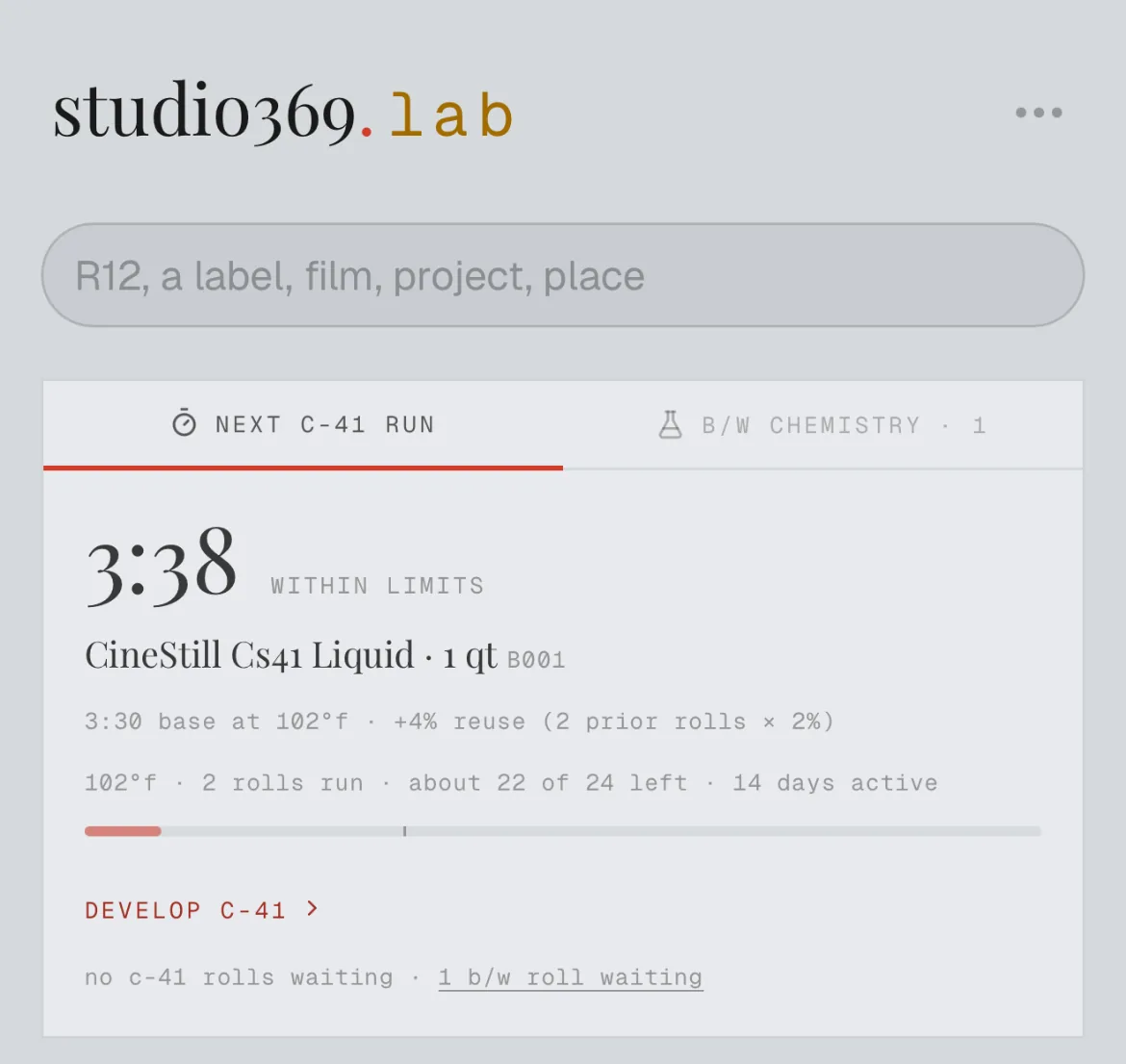
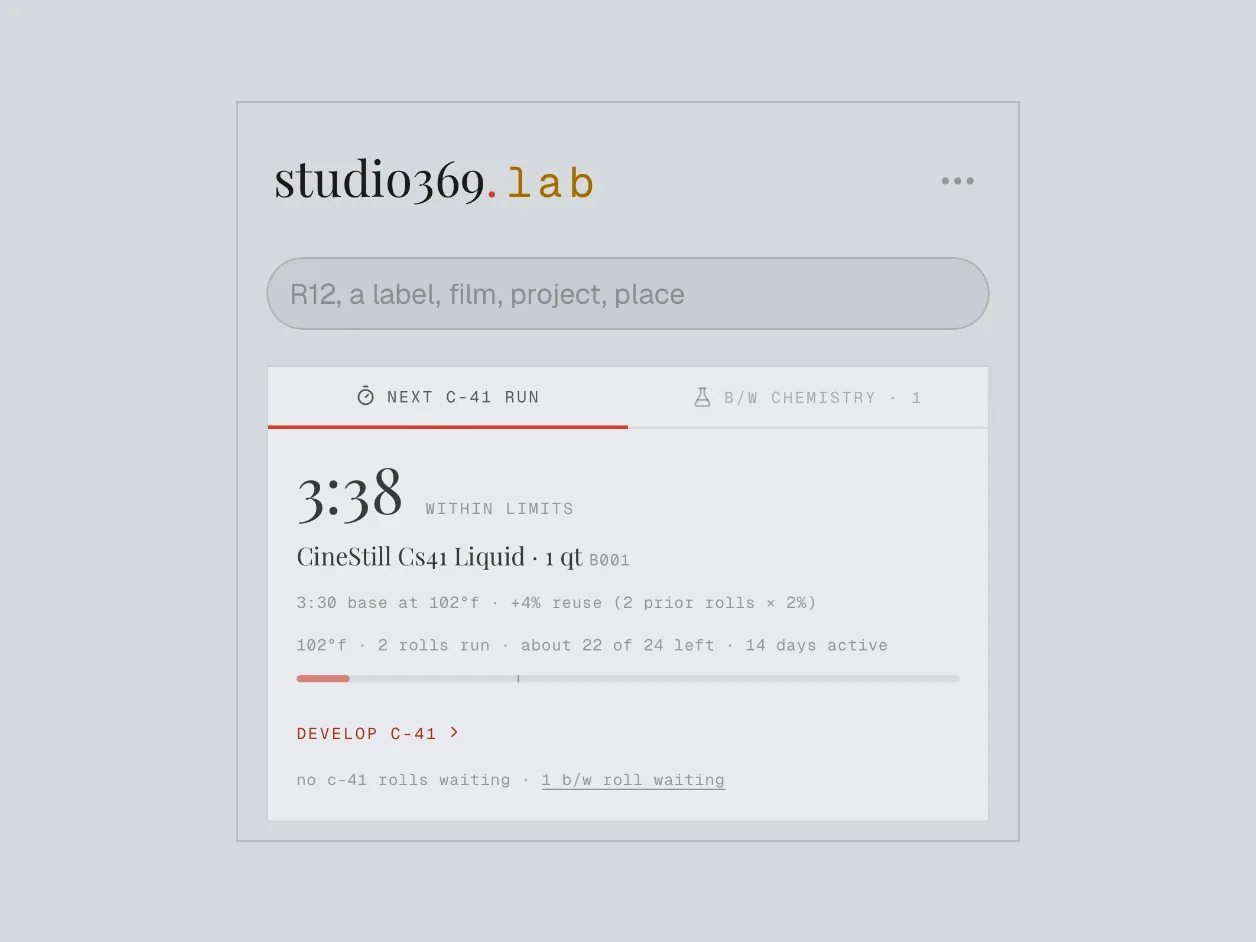
the develop station keeps the kit, the temperature and the time, and it counts how many rolls that chemistry has already seen, so the next time adjusts for what the kit has already been through. whether you develop at the sink or send the roll across town, the run stays with the roll, and when a negative comes out thin you can look at what happened instead of guessing.
the receipt.
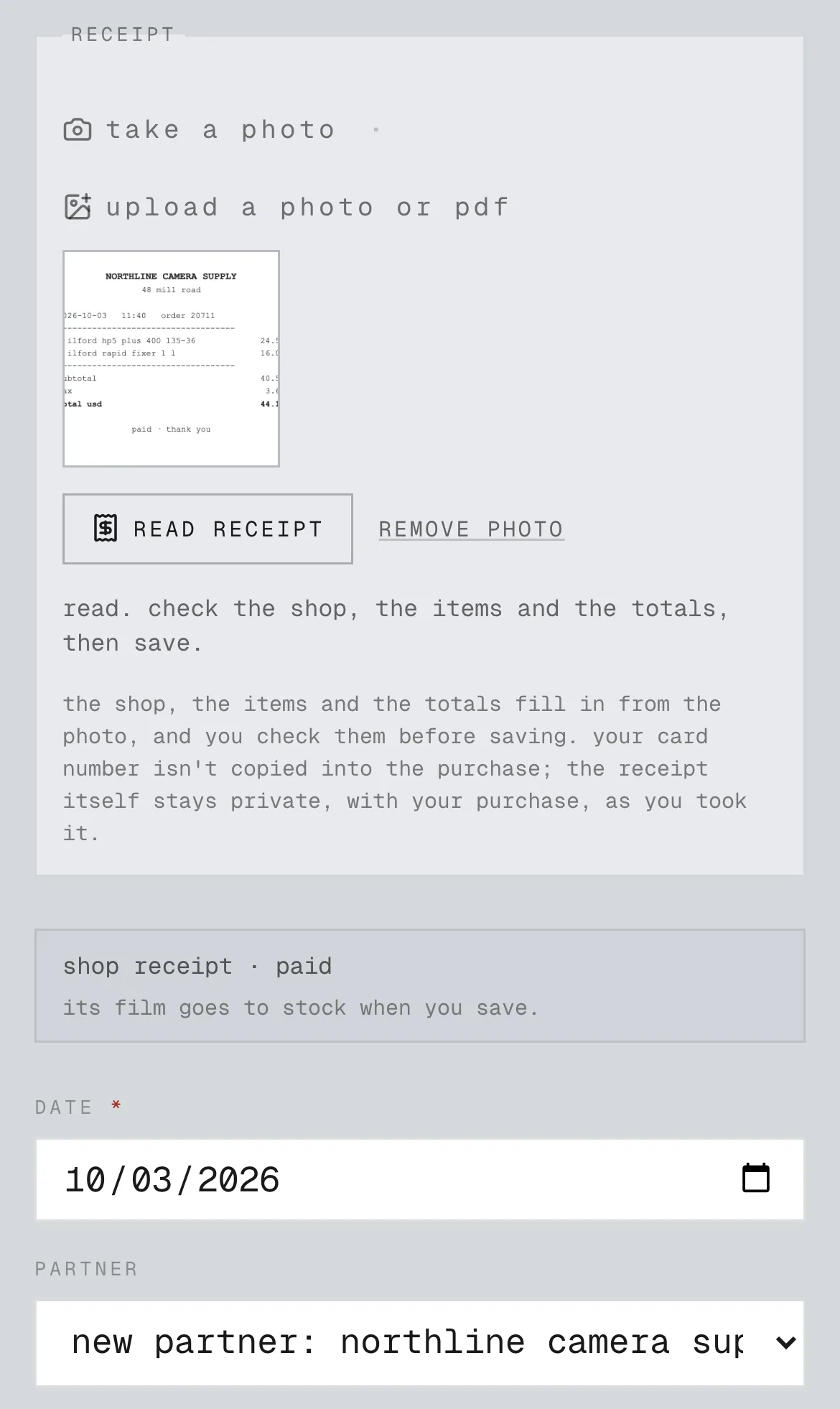
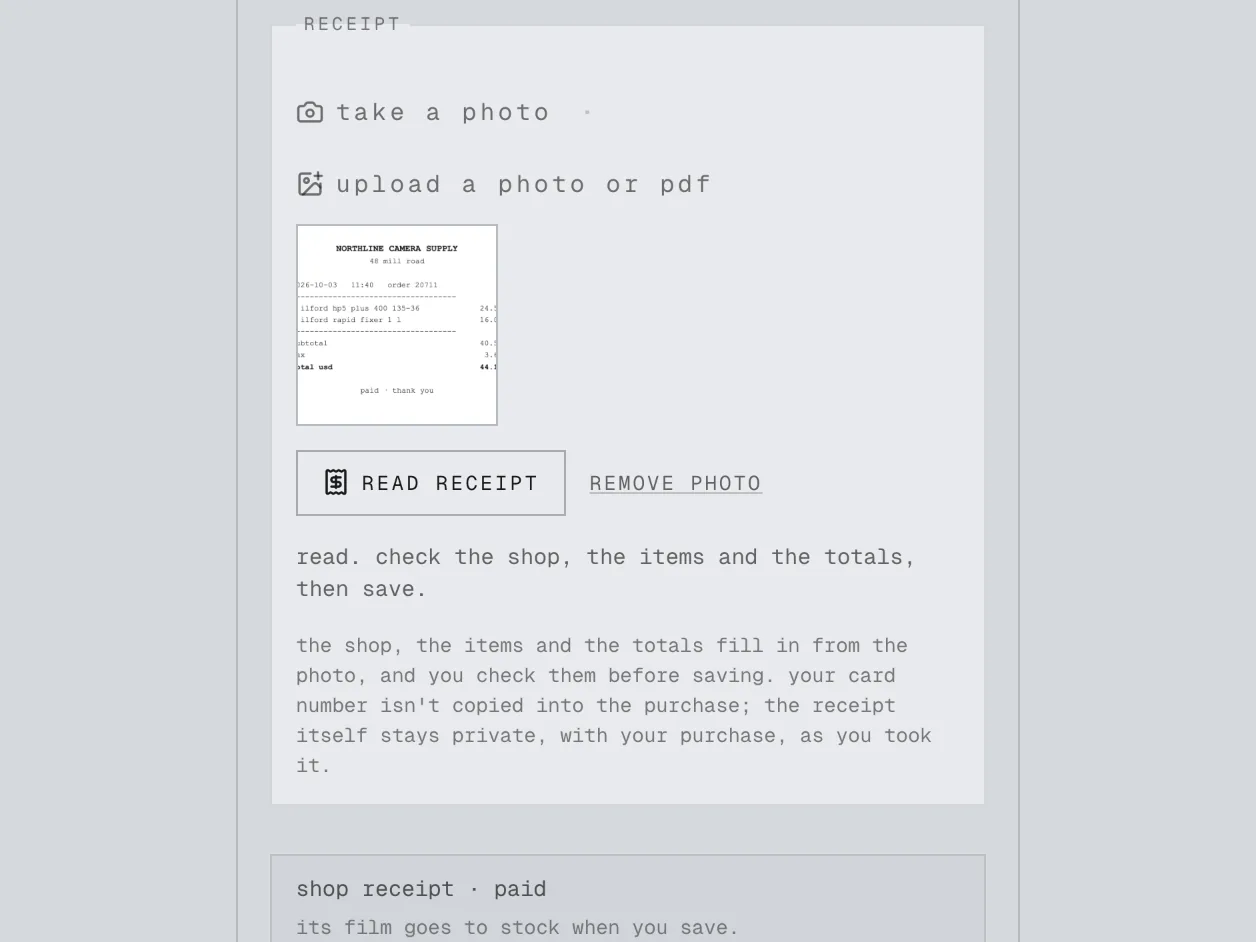
snap the receipt or drop in the pdf, and it's filed under the shop that sold it. the shop's details go into its record, and your card number isn't copied into the purchase; the receipt itself stays private, with your purchase, as you took it. months later the film, the chemistry and the paper can still be traced back to where they came from, without a shoebox of thermal paper fading in a drawer.
the cyanotype station.
cyanotypes have a station of their own, switched on in lab's settings when you need it. the paper and fabric you coat, the stock solutions and how old they are, the digital negative you printed from, and each print's exposure and wash are kept together, from the test strip to the final, with a short line you can pencil on the back.
the lab across town.
when a roll leaves the house, its record goes with it. lab keeps the scan link on the roll and shows how many days it has left, and each lab's page shows what you've bought there and what they've developed for you. the work that leaves the house comes back to the same record.
the file name.
lab writes each scan's file name while the roll develops, ready to copy when you scan. it's a small thing that does a lot of work: it's the thread between a file on a drive and the roll in the binder, and it holds when the drive changes.
the lock.
when a roll is done, you close it. its record locks, and every change made before that stays in its history, so a finished roll reads like a finished chapter, and the answer to "how was this made?" stays the one you'd have given the day you made it.
your copy.
your records are yours. lab's records leave with you as a file you can keep, whenever you want them.
pedigree
a roll is the first link in the chain behind a print: which film, which session, which chemistry, which lab, which scan. lab keeps that chain as you go, so when someone asks how a print was made you can show them, and stand behind the work, and behind its price.
how it fits
lab is one of four tools, with diary, edition and gear. you sign in once and they're all there, each one a door, and the ones you don't have yet are one request away. start with the one you need, and come as you are.
studio369.ai opens by invitation. ask for access whenever you're ready.